Removals parking problems in Kennington common solutions
Posted on 30/06/2026
Anyone who has tried to move a sofa down a narrow Kennington street at 8am knows the feeling: the van is close, the parking is not, and the clock is already ticking. Removals parking problems in Kennington common solutions is not a niche concern; it is one of the biggest reasons local moves run late, cost more than expected, or become a bit of a headache on the day.
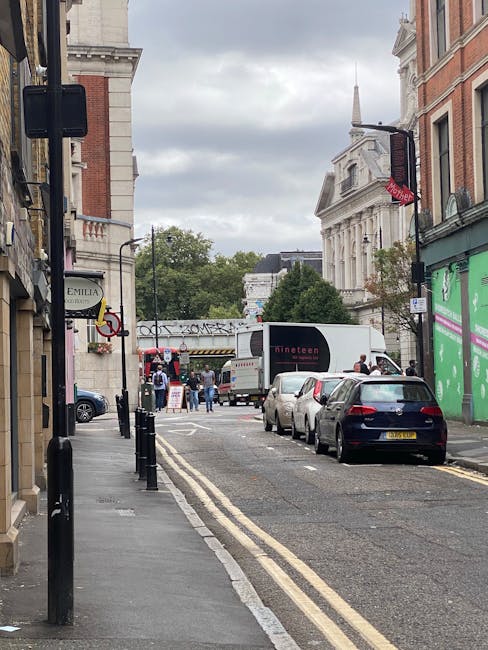
Kennington is lovely, but let's face it, it can be awkward for loading and unloading. Tight residential roads, controlled parking, limited kerb space, and the occasional double-parked delivery van can turn a straightforward move into a small puzzle. The good news is that most of these issues can be handled with the right planning. In this guide, we'll break down the common parking challenges, the smartest ways to solve them, and the practical steps that keep a removal day calm rather than chaotic.
If you are also planning the wider move, it helps to understand the local area and property mix first. Our pages on living in Kennington and the Kennington residential property market give useful background on why access and parking matter so much here.
Contents
- Why Removals parking problems in Kennington common solutions Matters
- How Removals parking problems in Kennington common solutions Works
- Key Benefits and Practical Advantages
- Who This Is For and When It Makes Sense
- Step-by-Step Guidance
- Expert Tips for Better Results
- Common Mistakes to Avoid
- Tools, Resources and Recommendations
- Law, Compliance, Standards, or Best Practice
- Options, Methods, or Comparison Table
- Case Study or Real-World Example
- Practical Checklist
- Conclusion
- Frequently Asked Questions
Why Removals parking problems in Kennington common solutions Matters
Parking is not just a convenience on moving day. It directly affects how fast items can be carried, how safe the team is, whether large furniture can be loaded without damage, and whether the move fits within the booked time. In Kennington, that becomes even more important because many homes and small businesses sit on streets where access is limited and parking can be tightly managed.
A removal van needs space, ideally as close to the entrance as possible. If the driver has to park around the corner or several doors away, the job takes longer. That means more carrying distance, more chances for bumps and scrapes, and often more stress for everyone involved. One missing parking plan can create a chain reaction. A quick move becomes a long one. A simple flat move becomes three trips instead of one. Not ideal.
There is also the question of courtesy. Neighbours, traders, and other road users all need to get on with their day. A sensible parking plan reduces blockage, keeps pavements clearer, and avoids unnecessary friction. That matters in a place like Kennington, where busy residential streets and mixed-use roads often have a lot going on at once.
For those planning a home move, it can help to read more about the practical side of local relocations through house removals in Kennington or, for smaller and more access-sensitive properties, flat removals. The access challenge is often the same, even if the size of the move is different.
How Removals parking problems in Kennington common solutions Works
The core idea is simple: identify the parking risk before moving day and decide how the vehicle will stop, load, and leave without disruption. In practice, that means looking at the street layout, the property entrance, road markings, local restrictions, and the size of the vehicle.
Most removal jobs in Kennington fall into one of a few broad scenarios:
- Clear kerb space available: ideal, but still worth checking for loading restrictions or resident-only bays.
- Restricted street parking: common in residential roads, especially where permits or timed restrictions apply.
- Tight access or narrow street: the vehicle may need to be smaller, parked at an angle, or split into a shuttle-style load.
- Busy road frontage: useful for quick loading, but often only if managed carefully and lawfully.
The best solution depends on the property, the volume of items, and the time of day. For example, a one-bedroom flat near the Oval might work well with a smaller vehicle and a short loading window, while a family house move may need a more deliberate plan with reserved space close to the entrance.
In our experience, the biggest mistake is assuming that "the van can just stop outside." Sometimes it can. Sometimes it absolutely cannot. That tiny assumption is where a lot of moving-day pain starts.
If your move is last-minute, it may help to consider same-day removals in Kennington or even a flexible man with van service in Kennington where vehicle size and timing can be matched more carefully to the street conditions.
Key Benefits and Practical Advantages
Getting the parking plan right does more than avoid a ticket. It makes the whole move smoother from start to finish.
- Faster loading and unloading: shorter distances between the property and the van usually means less time spent carrying.
- Lower risk of damage: fewer awkward turns, less lifting fatigue, and less chance of bumping walls, railings, or doorframes.
- Reduced stress: when the vehicle has a clear place to stop, everyone can focus on the move rather than the traffic.
- Better time control: especially useful if you have keys to pick up, building access slots, or a same-day schedule.
- Improved neighbour relations: nobody enjoys a van blocking their driveway or sitting over a dropped kerb for too long.
There is a quieter benefit too: confidence. Once you know where the vehicle is going to park and how the loading will happen, the day feels less uncertain. That can make a big difference, especially if you are moving with children, older relatives, or a packed calendar in the background.
If you are comparing moving options, it is sensible to look at the full range of removal services in Kennington and choose the one that fits your access conditions rather than just the item count.
Who This Is For and When It Makes Sense
This topic matters to more people than you might think. Parking problems affect not only homeowners but renters, students, office managers, landlords, and anyone moving bulky items in a dense part of London.
- Flat movers: if you are in an upper-floor flat with a narrow stairwell, every extra metre of carrying distance matters.
- House movers: family homes often mean more furniture, more boxes, and longer loading times.
- Students: moving at peak times, especially at month-end, can make street parking even harder.
- Office and shop moves: businesses often have a limited window for loading, which means parking has to be sorted properly.
- People with large or fragile items: pianos, wardrobes, and heavy furniture need close, stable access.
This is also relevant if your move is happening near busier local routes or event-adjacent areas. A nearby street party, football traffic, or market activity can change parking conditions quickly. You do not need to live through a full traffic drama to feel the effect. Even a fifteen-minute delay can throw off the whole schedule.
For access-heavy or item-specific moves, you may want to review piano removals in Kennington and furniture removals in Kennington, because both usually require extra planning around parking and carrying distance.
Step-by-Step Guidance
Here is a practical way to handle removals parking issues without overcomplicating it.
- Assess the street and entrance early. Stand outside the property and look at where a van could safely stop. Check if there are bays, single yellow lines, permit zones, or obvious pinch points.
- Measure the carrying distance. Roughly estimate how far items will need to travel from van to front door. This helps decide whether a larger vehicle or a smaller, more manoeuvrable one is best.
- Check timing windows. Some streets are much easier early in the morning or midweek. Others are calmer after the school run. Timing really matters.
- Speak to the removal provider in advance. Share photos, street names, access notes, and any concerns. A good mover can often suggest a better vehicle size or loading method.
- Plan for permits or loading arrangements if needed. Where parking controls apply, the move should be organised in line with local rules and building requirements.
- Reserve a fallback option. If the ideal space is taken, know where the next-best stopping point is. A backup plan avoids frantic, last-minute circling.
- Keep the route clear. Inside the property, make sure boxes, rugs, and loose items are out of the way so the team can move quickly once the van is parked.
A small but helpful habit: take photos of the street the day before. Morning light, evening light - it does not matter. What matters is having a real visual reference instead of relying on memory. Humans are terrible at this kind of thing, honestly.
If your move is likely to need a more compact solution, a man and van in Kennington may be a better fit than a larger truck. For some properties, it is not about having more vehicle. It is about having the right one.
Expert Tips for Better Results
These are the little things that tend to separate a smooth move from an annoying one.
- Book around local rhythm, not just your own diary: avoid obvious rush periods where possible. Early starts often work better in residential streets.
- Use a smaller vehicle when access is tight: a large van is not always the smartest choice if it cannot get close to the entrance.
- Label priority items clearly: if the first few items are the heaviest or most urgent, load them in the easiest sequence.
- Communicate any road quirks: low branches, narrow turns, speed bumps, awkward kerbs, or gated entrances can all affect parking and unloading.
- Build in a cushion: if you think loading will take an hour, plan for a bit more. The extra margin helps when parking is less convenient than hoped.
One thing local movers often notice is that parking problems are rarely just "parking problems." They are really access problems. That distinction matters. A van may be parked legally but still be inconveniently far away, and that changes the labour involved. It changes everything, actually.
For more on local access patterns and trickier street layouts, this guide to tight-access removals on Kennington Road is useful background reading.

Common Mistakes to Avoid
Most removal parking issues are avoidable. The main problem is that people only think about them once the van has arrived. By then, the options are narrower.
- Assuming parking will be available outside the property. It often isn't, especially later in the day.
- Not telling the removal team about access issues. This can lead to the wrong vehicle size or an unrealistic schedule.
- Ignoring loading restrictions. A space that looks free may still be restricted for certain hours.
- Leaving box stacks or furniture in the way. Even with perfect parking, a cluttered hallway slows everything down.
- Booking too late in the day. If parking is tight, the day's earlier traffic tends to make it worse, not better.
Another common slip is forgetting the return journey. Yes, you need a space to unload at the destination too. People sometimes solve the origin parking issue and then get surprised all over again at the other end. It happens more than you'd think.
If you are trying to avoid budget surprises, you may also find the article on avoiding hidden removals charges in Kennington helpful, especially where access-related costs are involved.
Tools, Resources and Recommendations
You do not need a complicated toolkit to handle parking well, but a few simple resources make a real difference.
- Street photos: useful for showing the removal team the entrance, kerb space, and nearby restrictions.
- Property notes: mention steps, lifts, gated access, or narrow hallways early.
- Floor plans or estate agent details: handy for flats and multi-storey buildings.
- Vehicle size guidance: helps match the van to the road, not just the item volume.
- Inventory list: keeps the move organised when parking means load order matters.
For many local customers, the most practical resource is simply a clear conversation before moving day. If you want a broader overview of what is available, the services overview can help you understand which type of move is most suitable. If your move needs temporary holding space because parking or timing is awkward, storage in Kennington may also be worth considering.
And for careful packing that makes loading quicker when the van is finally parked, it is worth checking packing and boxes in Kennington. Neat packing does not just look good. It saves minutes, and in a parking-sensitive move, minutes matter.
Law, Compliance, Standards, or Best Practice
Parking for removals is one of those things where local rules and common sense overlap. You need to follow any parking restrictions that apply to the street or building, and the removal vehicle should stop only where it is lawful and safe to do so. That sounds obvious, but on a moving day it is tempting to cut corners. Best not to.
In practical terms, good practice usually means checking whether the road has permit restrictions, limited waiting bays, or loading-only spaces. It also means avoiding pavement obstruction, not blocking driveways, and making sure the vehicle is positioned so the loading team can work safely.
For operators, health and safety expectations matter too. Safe lifting, sensible carrying routes, and clear communication all help reduce risk. If you want reassurance about how a provider approaches that side of the job, look at the company's health and safety policy and insurance and safety information. Those pages are useful because they speak to the real-world issues behind parking and access, not just the marketing gloss.
One careful note: parking rules can change from street to street and from one side of the road to the other. So if there is any doubt, treat the situation as needing confirmation rather than guessing. Guessing is expensive. Sometimes in tiny ways, sometimes not so tiny.
Options, Methods, or Comparison Table
Different parking solutions suit different types of removals. Here is a simple comparison to help you judge what is likely to work best.
| Method | Best for | Strengths | Limitations |
|---|---|---|---|
| Standard van parked close to the property | Easy-access houses or broad roads | Fast loading, minimal carrying distance | Not always possible in restricted streets |
| Smaller van or man and van | Flat moves, tight roads, smaller loads | More manoeuvrable, easier to position | May require more trips for larger moves |
| Shuttle-style loading | Very tight parking or blocked kerb space | Flexible when direct parking is unavailable | Takes longer and needs good coordination |
| Timed early-morning loading | Busy roads and high-demand streets | Better chance of available space | Requires an early start and good planning |
| Temporary storage plus staged move | Complex moves or split deliveries | Reduces pressure if access is unpredictable | Extra handling and possible added cost |
There is no single best choice for everyone. A larger vehicle may sound efficient, but on a narrow Kennington street it can actually slow everything down. A smaller vehicle may take a little longer in theory, yet get you a cleaner, safer result in practice. That trade-off is often worth it.
For business moves where loading windows are tighter, take a look at office removals in Kennington and the local guide to Kennington Lane office removals for shops and cafes.
Case Study or Real-World Example
Picture a second-floor flat move on a side street off Kennington Road. The property itself is straightforward enough, but the road has limited parking and a fair amount of daytime traffic. The building entrance is close to the kerb, yet not close enough to ignore parking altogether.
In that sort of situation, the successful approach is usually not "find the biggest van possible." It is more like this: arrive early, use a smaller vehicle where sensible, keep the loading route clear, and have the team ready to move as soon as the van is positioned. A short, calm loading window beats a long, messy one every time.
That same logic applied when we think about busy local flats near larger residential blocks. A move near the Oval, for example, can feel very different depending on whether the loading space is available first thing in the morning or only after the street has filled up. The difference is often just a couple of parking choices, but those choices change the whole day.
If your move is in a similar setting, the articles on SE11 house removals from Kennington Park to the Oval and moving out of Kennington Oval flats can give you a better feel for how local access affects the plan.
Practical Checklist
Use this checklist a day or two before the move. It keeps the parking side from becoming an afterthought.
- Confirm the full address and nearest street access point.
- Check whether the road has parking restrictions, permits, or loading rules.
- Take photos of the street, entrance, and any awkward corners.
- Tell the removal team about stairs, lifts, and narrow hallways.
- Decide whether a smaller van may be more practical than a larger one.
- Clear the path from the front door to the loading point.
- Prepare boxes so the first load is easy to grab.
- Plan for a backup parking spot if the ideal space is taken.
- Check timings so your move avoids the busiest part of the day if possible.
- Keep keys, documents, and essentials separate so they do not disappear into the van.
Expert summary: In Kennington, the best parking solution is usually the one that reduces carrying distance without breaking local rules or creating stress. Simple, but true.
Conclusion
Parking issues do not have to derail a move in Kennington. They just need to be treated as part of the moving plan, not as a last-minute nuisance. Once you think in terms of access, timing, vehicle size, and loading distance, the whole picture becomes much easier to manage.
The real win is not simply finding somewhere to stop. It is creating a move that feels organised, lawful, and calm from the first box to the last chair. And in a busy London neighbourhood, that is worth a lot more than it might seem at first glance.
If you are comparing options for your move or need guidance on the most suitable setup, a little early planning goes a very long way. Truth be told, that is where most of the savings come from.
Get a free quote today and see how much you can save.